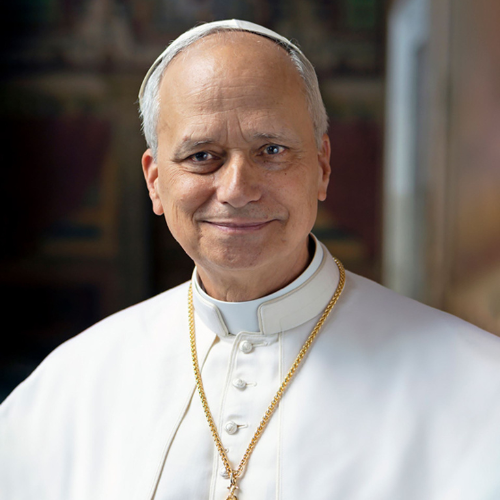
Pope Leo XIV released his first Encyclical letter on May 25th where he writes over 42,000 words of reasoning as to why we should not use AI.
For the past several years, artificial intelligence has become a common everyday use for most people, whether they want to use it or not. A quick Google search grants you an AI overview of what websites are saying, social media platforms such as Instagram and X (Twitter) have AI chatbots, and now writer and art block are told to be remedied by generative AI such as ChatGPT. Yet, even as AI is incorporated more into everything we do, it is increasingly demonstrated that people either don't like it or have major concerns on its impact.
Several studies show that while people tend to not like AI usage, they support it in areas such as cancer research or basic things like robot vacuums. Where the fear comes is with its use for art, writing, common jobs, and even war grade weaponry. As much as people try to combat the use of AI, it is practically impossible, with many schools even using AI for teaching; but now, people can refuse to use AI on account of their religious practices.
Pope Leo XIV released his first Encyclical letter, Magnifica Humanitas, which describes his idea of why artificial intelligence is not good for humanity and why it is not of the Bible. In his introduction, he compares AI's impact to two Biblical stories: The Tower of Babel and the rebuilding of the walls of Jerusalem.
The story of the Tower of Babel describes a one-language human race attempting to build a tower high to the heavens for their own glory, but God disrupts them with different languages and by scattering them across the Earth. The story of rebuilding the walls of Jerusalem describes exiled Jewish people of all types of backgrounds working together to rebuild their city walls in only 52 days, becoming unified.
Pope Leo XIV says, “We must, then, avoid the ‘Babel syndrome,’ namely the idolatry of profit that sacrifices the weak, a uniformity that neutralizes differences, and the pretense that a single language — even a digital one — can translate everything, including the mystery of the person, into data and performance.” Continuing, he says, “Instead, let us choose the ‘way of Nehemiah…’ Rebuilding today means recognizing that, precisely from the plurality of voices and visions which, even though they sometimes remind us of the confusion caused by the diversity of spoken languages, a bright possibility emerges.” Of course, Pope Leo XIV does address that AI can be “valuable,” but he firmly states we must be vigilant with its use and learn to regulate it.
Not only does the Pope’s claim call for action, it also allows people easier access to the refusal of AI usage; not to say people weren’t using religion as a reason for not using AI before the Encyclical was published. In fact, a North Carolina software engineer, Erin Maus, with the help of an employment lawyer and one of her local ministers, was able to build a case as to why she could not use AI. She first suggested it in April of this year, and was approved the exemption right before the Pope published his encyclical.
So, whether it be your school, your job, or even simple peer pressure, you can now refuse to use AI on a religious basis, something clearly stated in Pope Leo XIV’s 42,000 word Encyclical.


 Printer-friendly version